
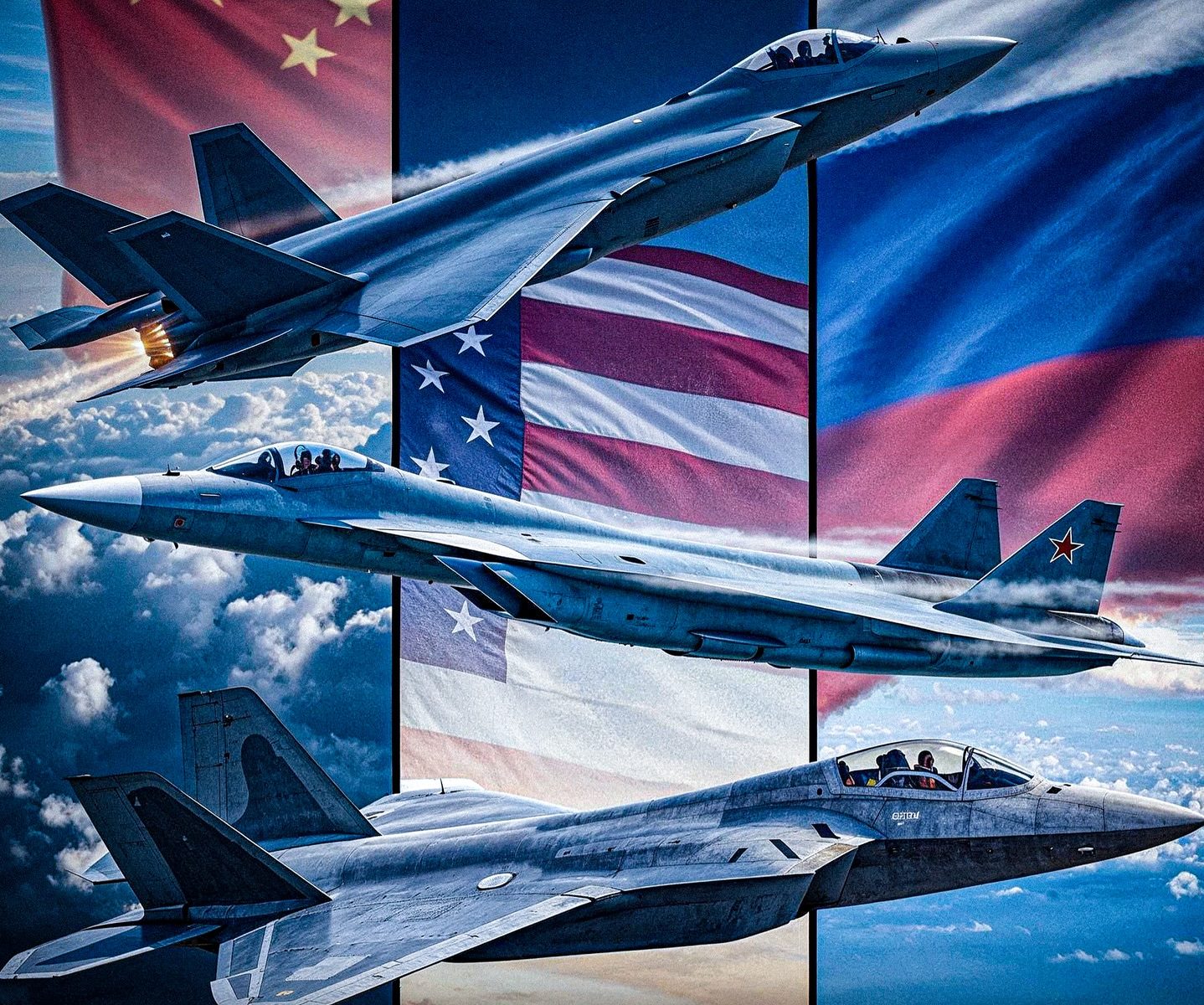
The United States Has More Military Aircraft Than the Next Five Air Forces Combined — And the Real Reason Why Might Shock You
There is something almost surreal about realizing that one country controls more military aircraft than most of the world combined. Not just a small advantage — a staggering gap that reshapes global power before a single missile is fired. We talk about nuclear weapons, we talk about cyber warfare, but raw air dominance still decides who gets to fly, who gets to strike, and who owns the sky when everything falls apart. That’s why the numbers below matter — not as trivia, but as a quiet roadmap of who truly holds power in 2025.
And here’s the jaw-drop moment almost nobody outside the defense world thinks about:
The United States alone has over 13,000 military aircraft.
The next five countries combined don’t match it.
You can call it industrial scale, you can call it defense spending, you can call it obsession with global presence — but the result is the same: if air power decides wars, one country starts every fight with the world’s largest head start.
Let’s break down the real picture — country by country — just like the images show.
UNITED STATES — 13,043 AIRCRAFT
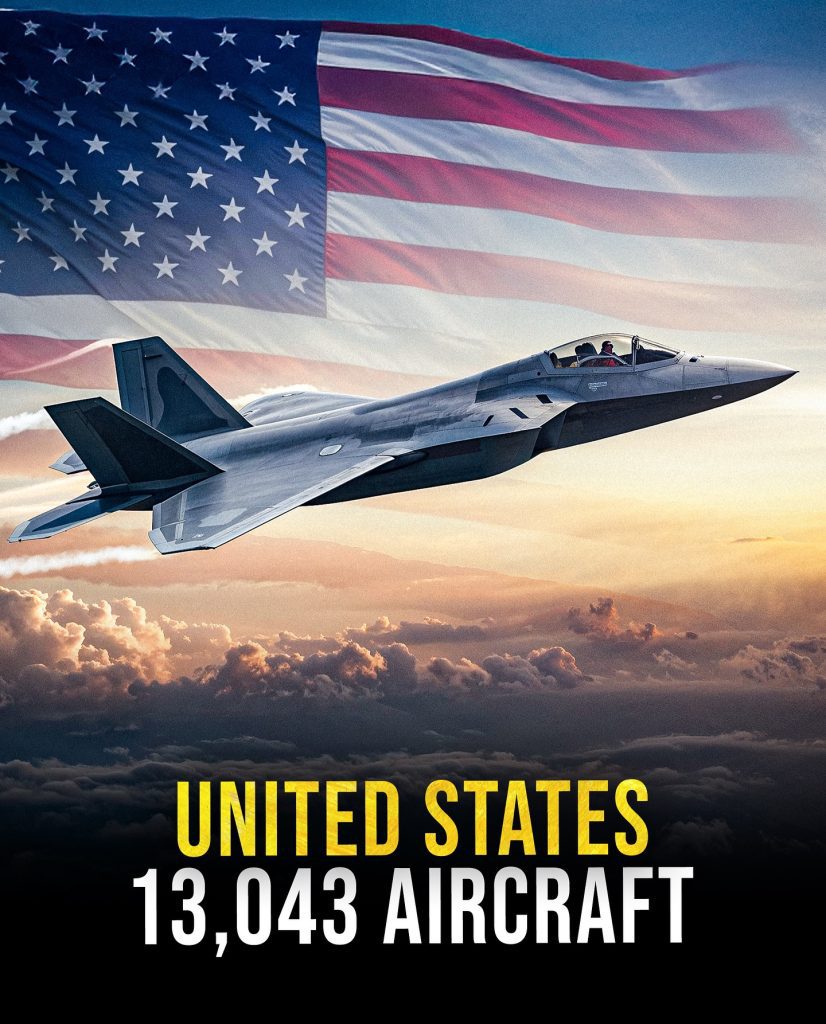
No matter how you look at it, no country even comes remotely close to the United States in the sky. Thirteen thousand military aircraft is not a fleet — it is an air empire. The U.S. Air Force alone is larger than the next two entire nations’ fleets combined. Then add the U.S. Navy, Marine aviation wings, National Guard air wings, and all reserve fleets — that’s how you get numbers this huge.
The United States builds aircraft at a scale most countries cannot imagine. It operates over 2,600 fighter jets, hundreds of stealth aircraft, and the world’s only active fifth-generation bomber fleet. It has 11 aircraft carriers and 9 more amphibious assault ships that operate fighters — meaning the U.S. can park an entire air force off literally any coastline on Earth.
People sometimes argue “quantity isn’t everything.” True — but the U.S. also has quality. The F-22 Raptor is still considered the world’s most dominant air-to-air fighter. The F-35 is now flying in over a dozen allied nations. American bombers can strike any country in the world without landing. And perhaps the biggest flex: the U.S. Air Force has more cargo lift capacity than the next ten countries combined — meaning America can move whole armies faster than others can move ammunition.
This is not just military power. It’s logistical power. It’s strategic mobility. It’s “we can get there, and you can’t stop us.”
RUSSIA — 4,292 AIRCRAFT
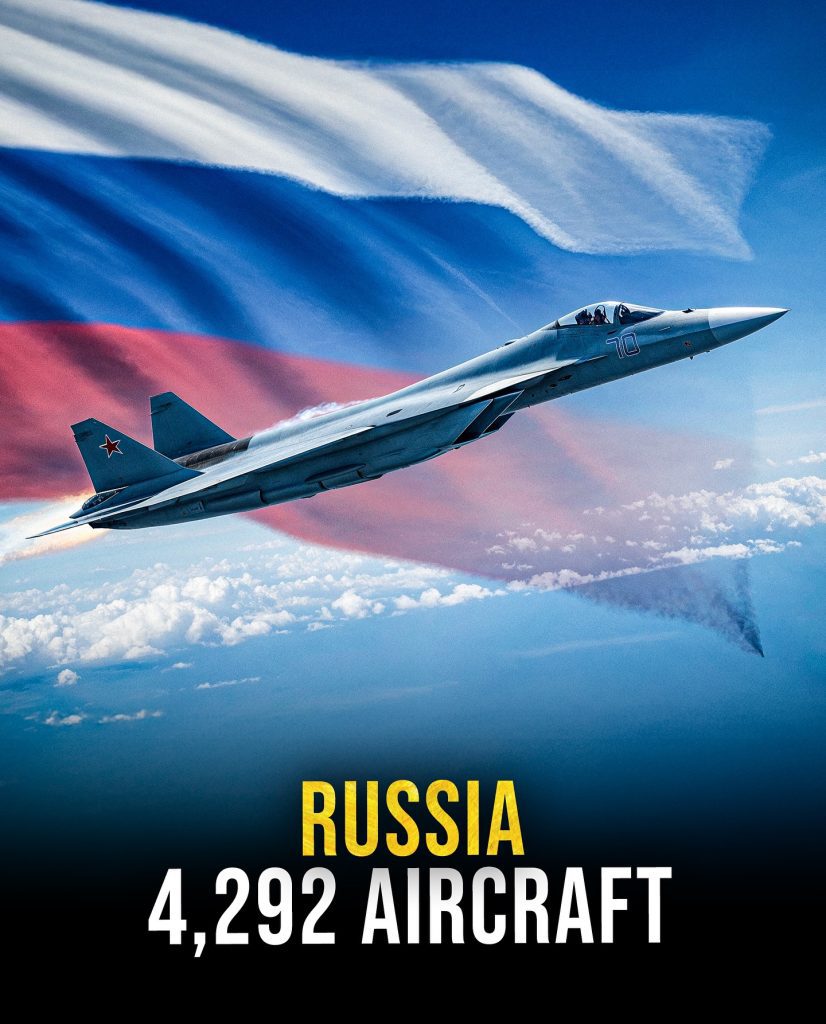
Russia’s air force looks huge on paper — more than 4,000 aircraft — but reality is complicated. A large portion of this fleet is aging Soviet-era designs. Even today, many of Russia’s tactical aircraft date back to the Cold War. And yet, the country still fields an enormous number of fighters, interceptors, and ground attack aircraft. The Su-35 remains one of the most respected non-stealth fighters in service, and the newer Su-57 stealth platform exists — though only around a dozen are believed to be fully operational.
Russia’s biggest strategic advantage is geography. It has the world’s largest landmass and maintains dozens of hardened bases spread across Europe and Asia. Its aircraft are built for distance, cold weather operation, and missile range. Its weakness is industrial capacity — Russia cannot replace losses quickly. The war in Ukraine exposed serious supply chain limits, from microchips to aircraft maintenance.
But even in weakened form, Russia remains the #2 air fleet in the world. That alone says everything about how powerful it once was — and how dangerous it can still be.
CHINA — 3,309 AIRCRAFT
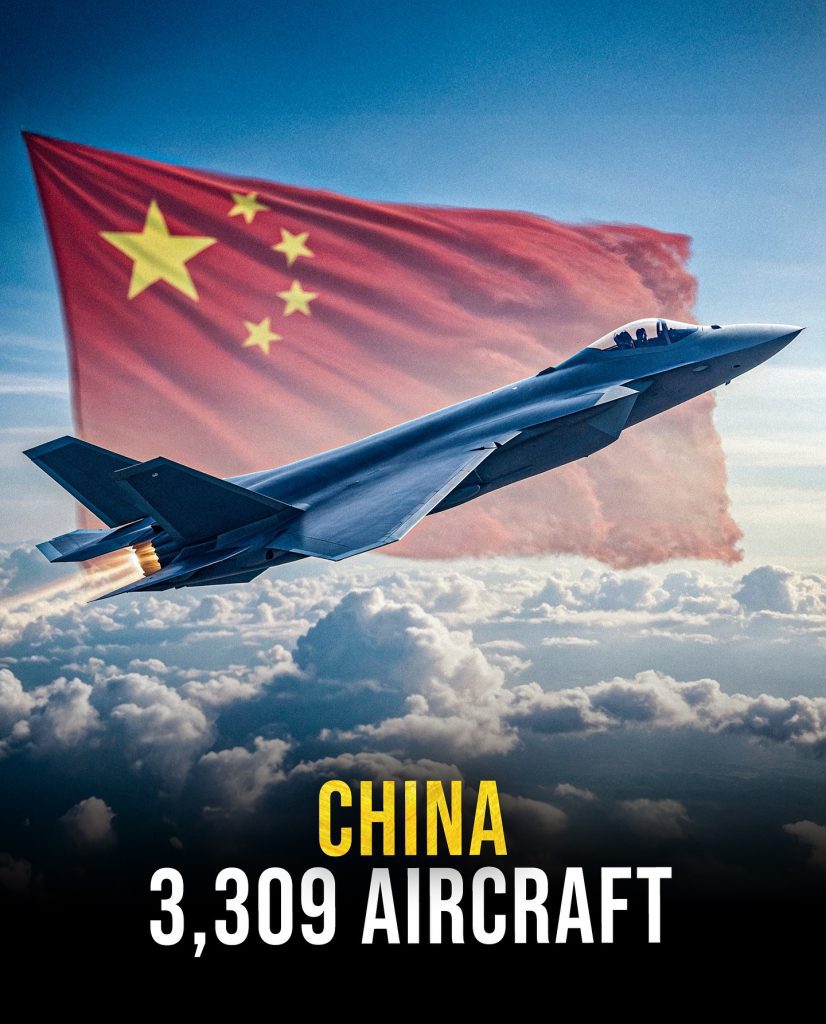
China’s number — just over 3,300 aircraft — is not the headline. The speed at which it is growing is the story. Twenty years ago, China barely had a modern fleet. Today, it is producing fighters at a faster rate than any country on Earth. The J-20 stealth fighter is now entering mass deployment. Hundreds of fourth-generation fighters like the J-10 and J-16 make up the modern backbone of the PLA Air Force.
China is also building airborne early-warning aircraft, refuelers, and strategic transport planes — all things it never had before. The biggest unknown is training. American pilots average far more flight hours than Chinese pilots, and historical data shows training wins dogfights more than hardware alone.
But China is catching up. Quietly. Quickly. Relentlessly.
INDIA — 2,229 AIRCRAFT
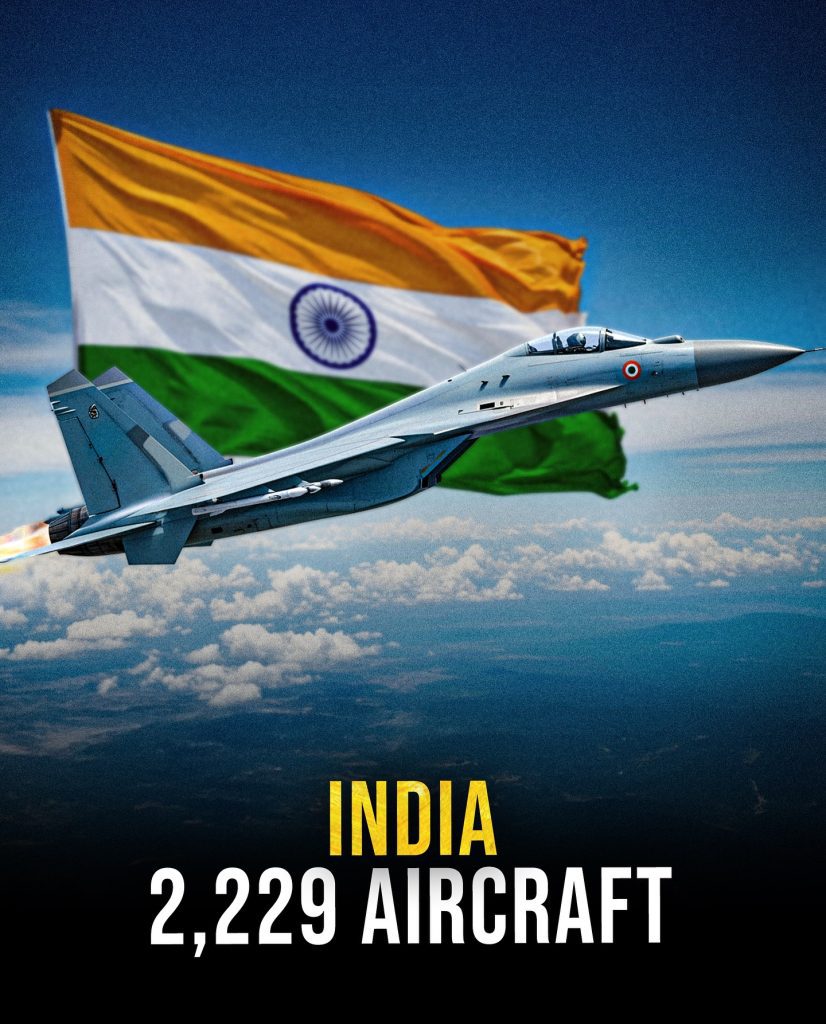
India is a sleeping giant in the air. With more than 2,200 military aircraft, it fields one of the most diverse fleets in the world. Russian-made Sukhois, French Rafales, aging MiGs, and domestically produced Tejas fighters all fly under the same flag.
India’s biggest strength is strategic necessity. It has two nuclear-armed rivals on its borders — Pakistan and China — so investment is not optional. India trains aggressively for both high-altitude combat and island protection missions. The country is also developing a next-generation fighter of its own, aiming to become fully independent from foreign suppliers.
The world forgets this number: India fields more aircraft than France, Japan, Turkey, and Egypt — all combined.
SOUTH KOREA — 1,592 AIRCRAFT
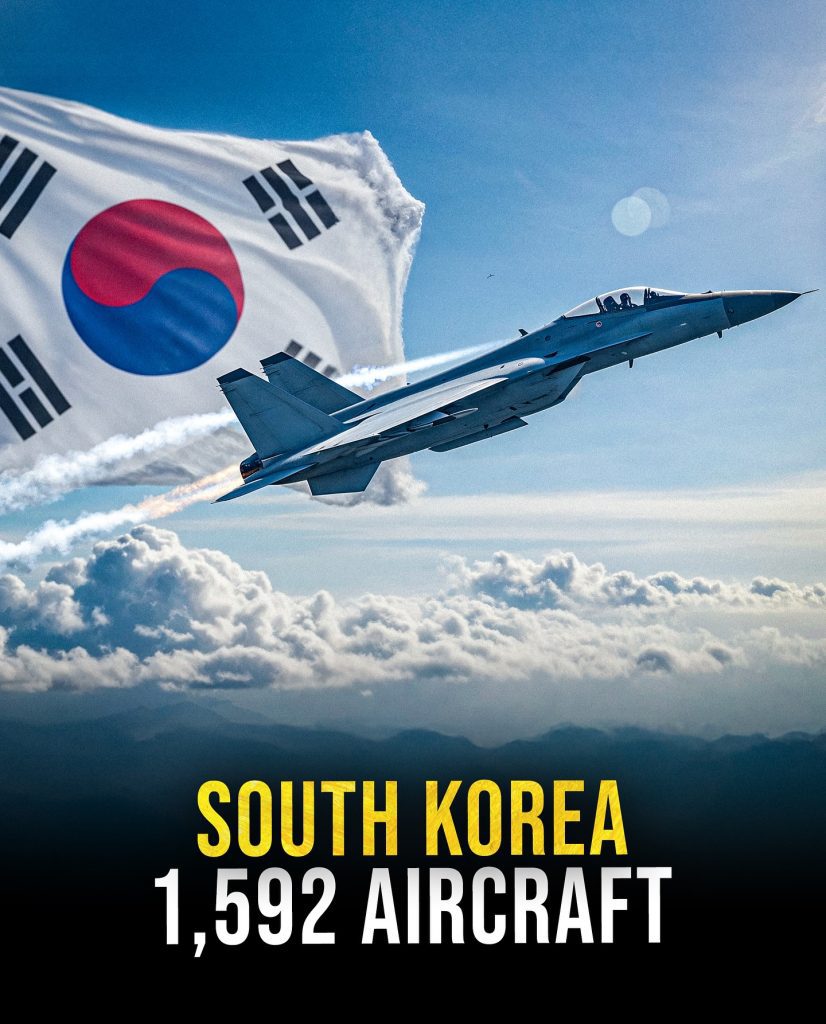
South Korea’s air fleet is one of the most modern on Earth. Nearly 1,600 aircraft — most of them advanced fighters — sit just 100 miles from North Korea. That alone explains the scale. South Korea flies F-15s, F-16s, and is now buying F-35s at high speed. It also builds its own fighter — the KF-21 Boramae — which could enter export markets and reshape air power in Asia.
South Korea may not be a global superpower, but it has one of the most combat-ready air forces on the planet. Every pilot trains like war could start tomorrow — because for them, it literally could.
JAPAN — 1,443 AIRCRAFT
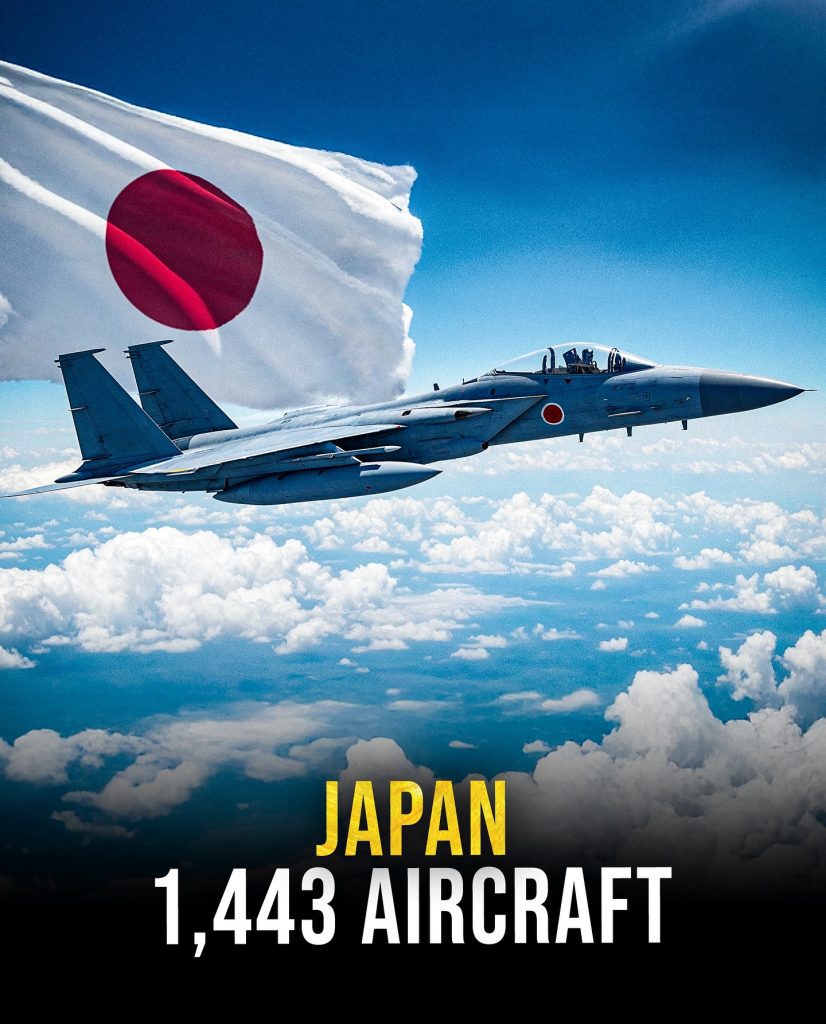
Japan sits in a tense triangle — China, Russia, and North Korea all within missile range. That is why Japan’s 1,443 aircraft fleet matters far more than its size suggests. Japan operates F-35s, advanced F-15J fighters, and some of the best radar systems ever built. It has begun refitting its “helicopter destroyers” into aircraft carriers — making Japan a carrier-power again for the first time since World War II.
Japan never talks loudly about military power. But it quietly owns one of the most technologically advanced air fleets in existence.
PAKISTAN — 1,399 AIRCRAFT
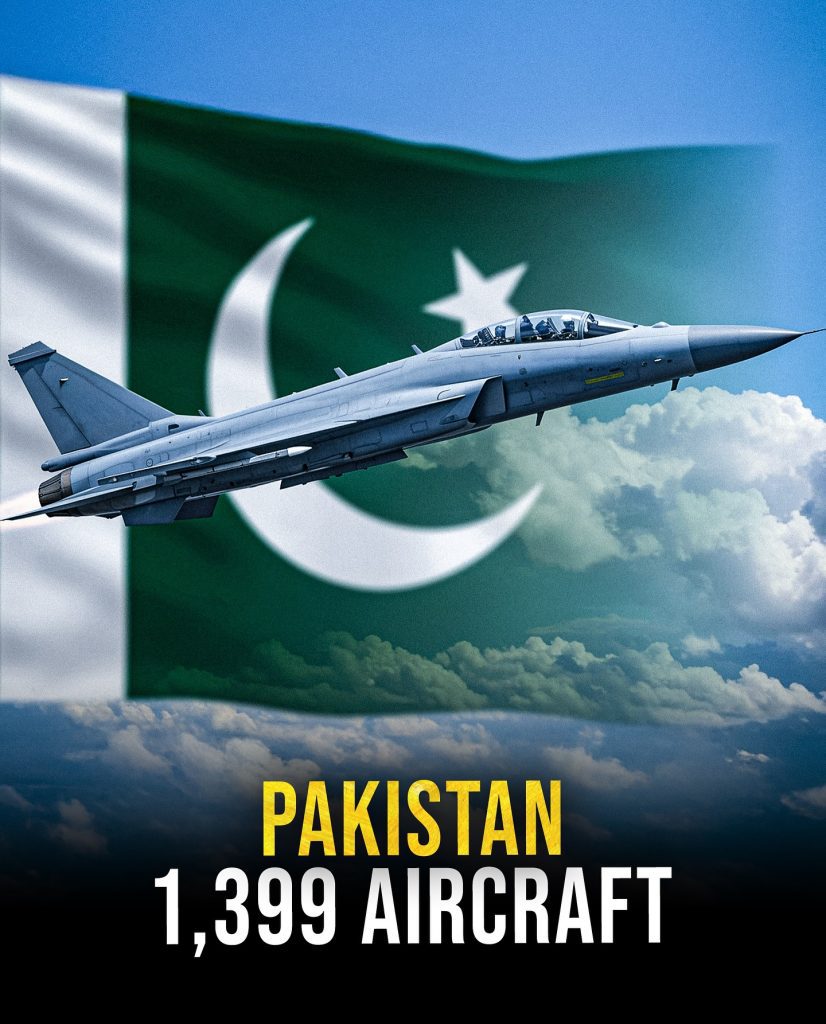
Pakistan’s fleet of nearly 1,400 aircraft surprises many people. The country is often underestimated — but it trains some of the best fighter pilots in the world. Its fleet includes F-16s, Chinese-designed JF-17s, and upgraded legacy fighters. Pakistan is the only Muslim-majority country with a fully modernized nuclear-capable air wing. Its pilots have trained NATO forces, won competitive dogfighting exercises, and even downed Indian aircraft in real combat in 2019.
Numbers don’t tell the full story — Pakistan’s biggest strength is pilot skill and real-world experience.
EGYPT — 1,093 AIRCRAFT
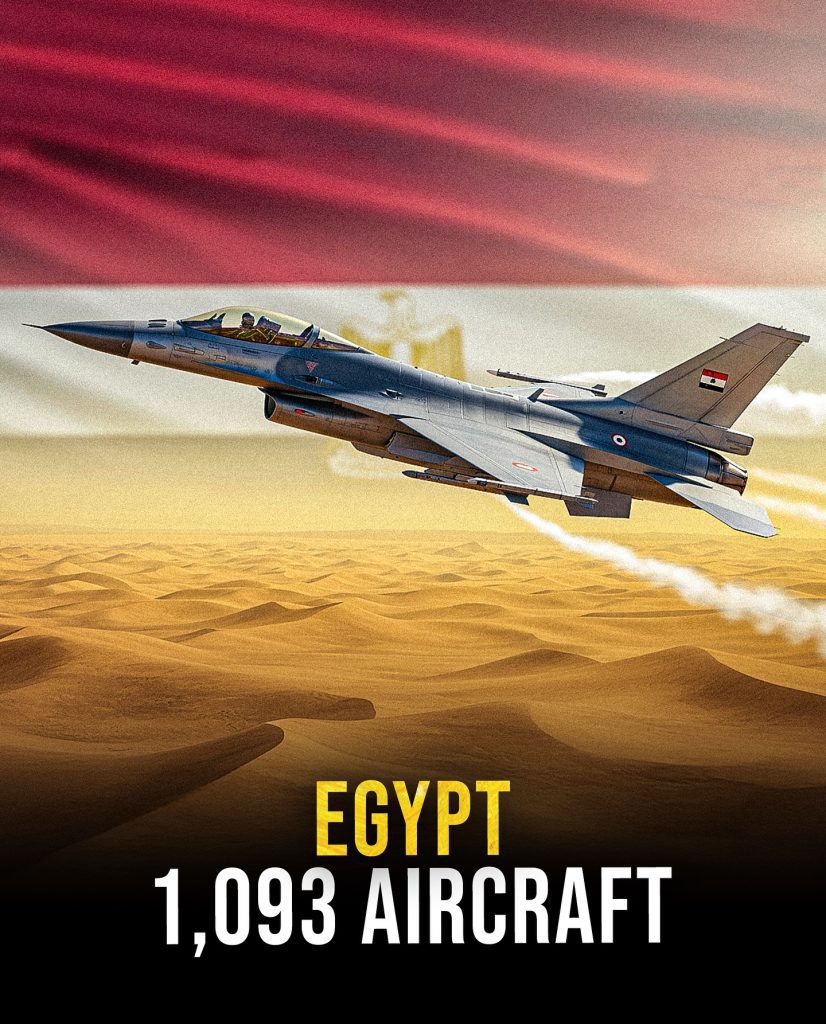
Egypt operates more aircraft than Germany, the U.K., or Israel — a fact that shocks most people. Its air force has become one of the most heavily funded in the Middle East. It flies F-16s, French Rafales, Russian MiG-29s, and Apache gunships. That level of diversity requires enormous maintenance capacity, but Egypt buys heavily from every major supplier to keep political alliances balanced.
Egypt’s air fleet exists for one core reason — control of the Nile, the Suez Canal, and regional deterrence.
TURKEY — 1,083 AIRCRAFT
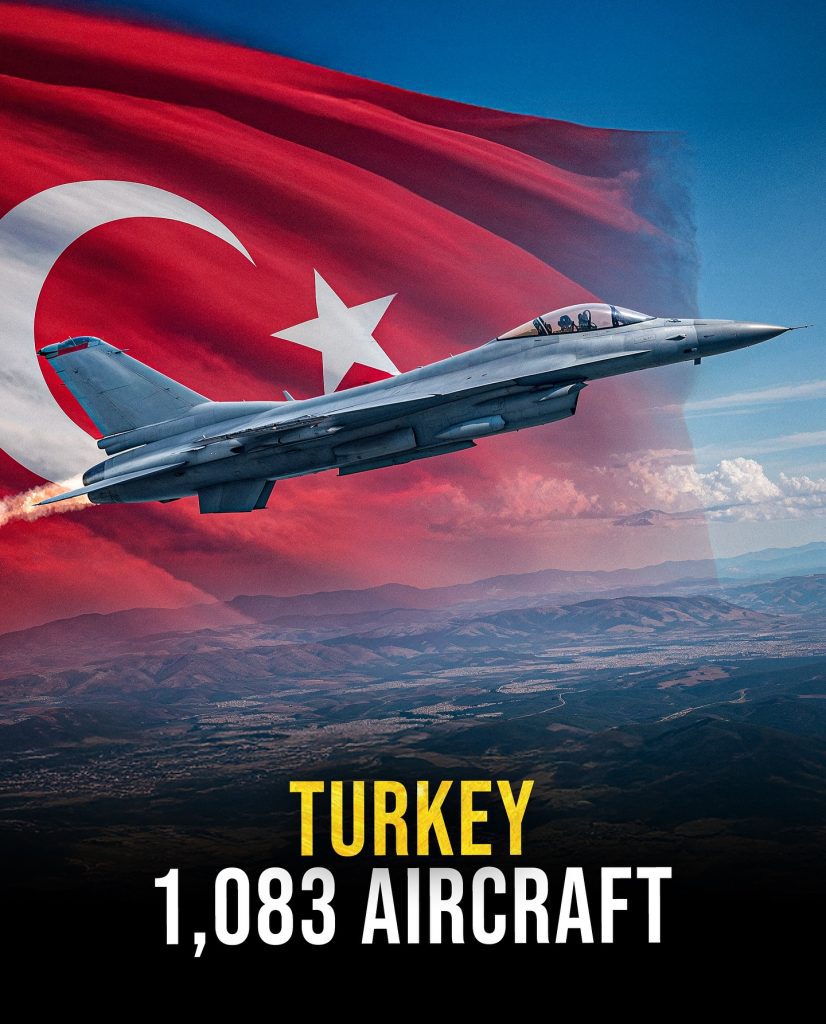
Turkey owns one of NATO’s largest air forces — even larger than France or the U.K. It flies over a thousand aircraft, mostly F-16s, and is now developing its own stealth fighter, the KAAN. Turkey does not just protect its own borders — it flies missions in Syria, Libya, Iraq, and the Mediterranean. It also produces some of the most successful modern drones in the world — the Bayraktar series.
Turkey is proof that regional power + industrial base = military relevance far beyond borders.
THE FINAL TRUTH ABOUT AIR POWER
These numbers don’t just represent aircraft. They represent strategy. They show who can project power, who can defend, and who must rely on alliances when things get dark.
One country still sits at the top — the United States — with a lead so large that it is not measured in numbers, but in decades of advantage. But the growth of China, the modernization of India, the resilience of Russia, and the strategic rise of countries like South Korea and Turkey tell a different story:
The battle for the skies is not over. It is evolving.
And whoever owns the sky in the next decade will not just win wars — they will write the rules of the world beneath them.